AC Overflow Water Damage in Vacaville, CA
In a long run of 100-degree days, an attic air handler can pull gallons of water out of the air every day. When the drain clogs, that water lands in the ceiling. The drying team gets it back out.
(888) 774-9605Get the Vacaville AC leak dried out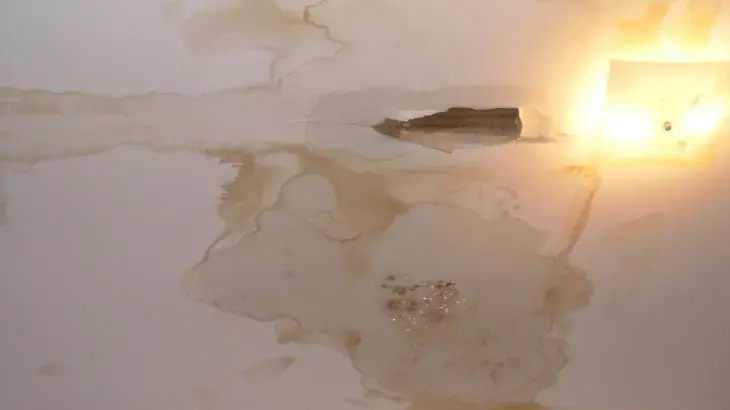
First steps for AC overflow water damage in Vacaville
- 1
Shut off the AC
Turn the thermostat off so the unit stops adding water to the pan.
- 2
Catch drips
Put a bucket under drips and move furniture out of the way.
- 3
Cut the light circuit
Turn off the breaker for any light fixture with water in it, if the panel is dry.
- 4
Call two trades
Call an HVAC technician to clear the drain, and call to get the ceiling and attic dried.
What does AC overflow water damage cost in Vacaville, CA?
In Vacaville, CA, AC overflow water damage restoration typically runs $600 to $3,500, depending on how much insulation got wet, how large the ceiling area is and whether walls or flooring below were reached.
Caught early
$600 to $1,200- Small ceiling area
- Drying in place
- Daily readings
Insulation involved
$1,200 to $2,500- Insulation removal
- Ceiling cavity drying
- Cleaning
Long-running overflow
$2,500 to $3,500+- Ceiling opened
- Walls checked
- Extended drying
For a closer planning number, try the water damage cost calculator. The restoration company sets a firm price after it sees the damage.
How AC overflow water damage is handled in Vacaville
Rapid local response
The response team works day and night across Vacaville, and emergency water is normally worked the day it comes in.
IICRC S500 drying standard
Structural drying, not just surface drying: equipment stays until the readings say dry, not until it looks dry.
Claim-ready documentation
A moisture map, daily readings and timestamped photos go into a file the adjuster can work from.
Vaca Valley water experts
Slab leaks, winter storms and attic AC overflow are the losses the Vacaville restoration crew knows best.
The AC overflow water damage process, step by step
- 1
Map the moisture
The tech who does the walkthrough maps moisture with thermal imaging and pinless meters before any equipment goes down.
- 2
Pull the water
The extraction crew removes standing water with truck-mounted extraction, so it leaves the building instead of moving to the next room.
- 3
Set the drying
The drying team places air movers to each room's evaporation load and runs LGR dehumidifiers to pull that moisture from the air.
- 4
Read it dry
Readings go in the log every day until wet materials sit within 2 to 4 points of a dry reference, and the claim file gets the logs and photos.
Vacaville summers regularly run past 100 degrees, and many homes here have the furnace and air handler in the attic. An air conditioner pulls moisture out of indoor air, and that water drains away through a small condensate line. When the line clogs with algae or dust, the primary pan fills, and if the secondary pan is rusted, missing or has no float switch, the overflow goes straight into the ceiling below.
Why AC overflow is sneaky
- It happens in summer, when no one is thinking about leaks
- The water spreads through insulation before it shows on the ceiling
- Stains often appear near a vent, the hallway return or a light fixture
- Slow overflows can soak an area for days before anyone notices
How AC overflow damage is dried
An HVAC technician clears the drain and checks the pans and float switch. The tech who does the walkthrough then checks the attic insulation, the ceiling drywall and any walls below with thermal imaging and meters. Wet blown-in insulation usually comes out. Firm drywall can often be dried in place with air pushed into the cavity; soft or sagging sections are removed.
Condensate from a dusty pan is often Category 2, so wet materials are cleaned and treated as needed. The drying team runs dehumidifiers and air movers and records readings every day. In summer the attic itself is hot and dry, which helps, but the ceiling cavity still needs airflow to finish.
Check your risk
The AC overflow risk check weighs where the unit sits, whether it has a secondary pan and float switch, and how long since the drain was flushed. The Department of Energy AC maintenance page explains routine AC maintenance. For stains after rain instead of heat, see roof leak water damage.
Related water damage services in Vacaville
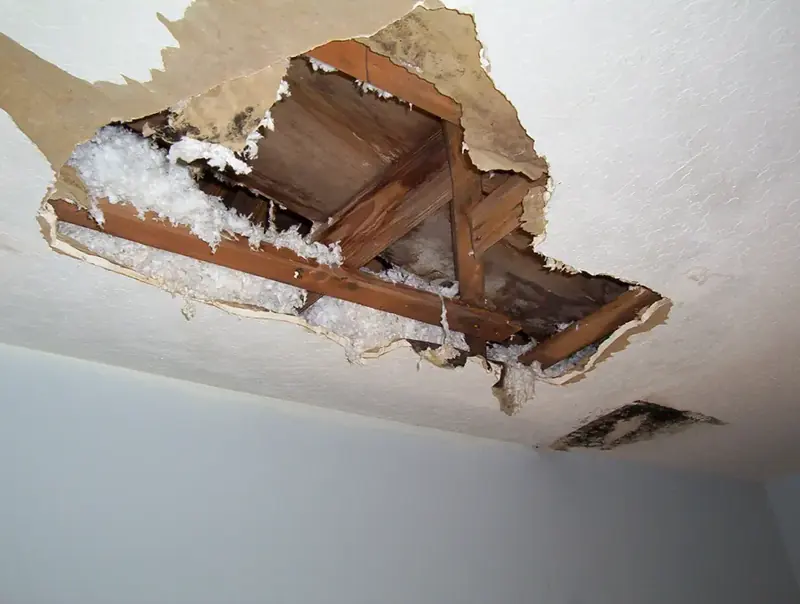 Ceiling Leak Water DamageUpstairs bath and laundry leaks traced, the ceiling opened only where the readings say.
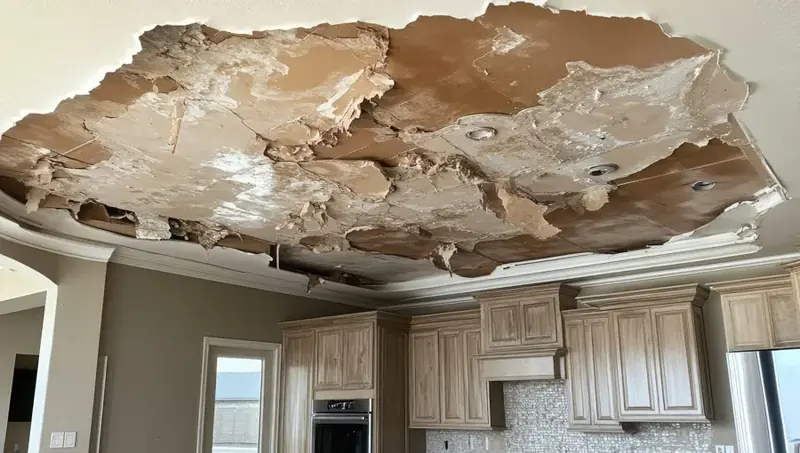 Roof Leak Water DamageWinter storm rain through worn shingles, flashing and vents, dried from the attic down.
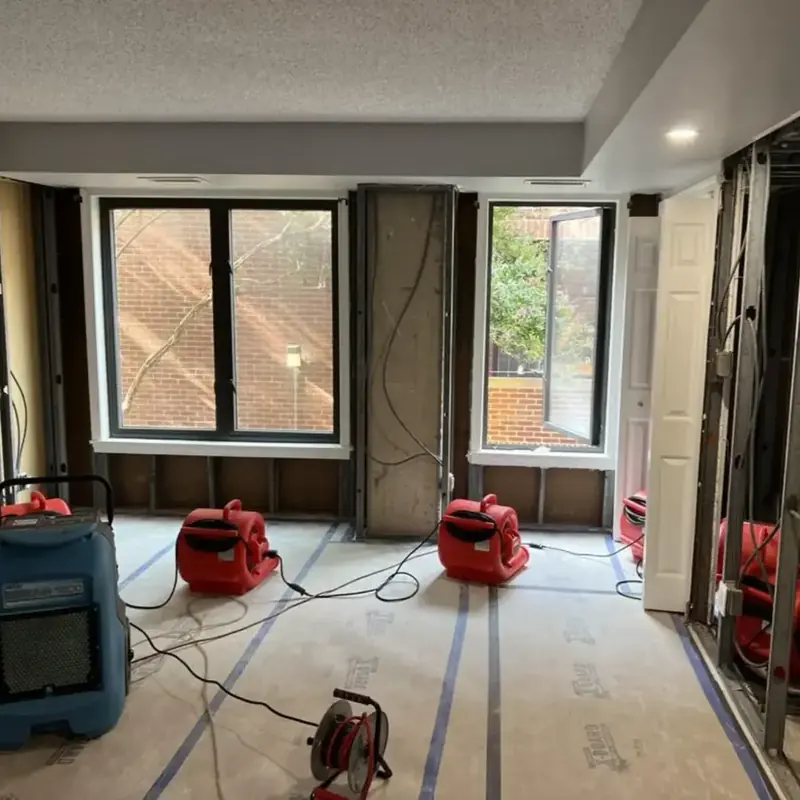 Structural DryingFraming, subfloor and wall cavities dried to a measured reading, not to a date on the calendar.
AC Overflow Water Damage coverage across Vacaville
The restoration team handles AC overflow water damage in every Vacaville ZIP code and the neighboring Solano County communities.
The restoration team covers all of Vacaville, from downtown and Browns Valley to Leisure Town and the Nut Tree, plus Elmira, Dixon, Winters and Allendale.
ZIP codes 95687, 95688 and 95696.
See every area coveredAC Overflow Water Damage questions
Why is water coming through my ceiling in summer?
In Vacaville the most common summer cause is an attic AC overflow: a clogged condensate drain fills the pan and the water spills into the ceiling. A leak from an upstairs bathroom is the other usual suspect.
Should I turn off the air conditioner?
Yes, until the drain is cleared. Every hour it runs in hot weather it can add more water to the attic.
Does wet attic insulation have to be replaced?
Blown-in insulation that soaked through usually comes out, because it holds water against the ceiling and loses its value. Small damp areas can sometimes be dried.
How can I prevent AC overflow?
Have the condensate drain flushed each spring, make sure the secondary pan is sound, and add a float switch that shuts the unit off if the pan fills.
Is AC overflow damage covered by insurance?
Sudden overflows are often covered, while damage from long-term neglect may not be. Coverage depends on your policy, so it is worth checking with your own insurer.
How long does it take to dry an AC leak?
Most contained AC overflow losses dry in two to four days once the drain is cleared. Larger wet areas or wet walls take longer.
Still wet while you read this? The restoration team works around the clock.
(888) 774-9605Ask about water from the attic unitCeiling wet in the middle of summer?
An attic AC overflow keeps adding water until the drain is cleared. Get the ceiling and insulation dried.