Ceiling Leak Water Damage in Vacaville, CA
A leak from an upstairs bathroom or laundry soaks the ceiling below before anyone notices. The restoration team finds how far it spread and dries the ceiling cavity, not just the stain.
(888) 774-9605Get the Vacaville ceiling leak traced now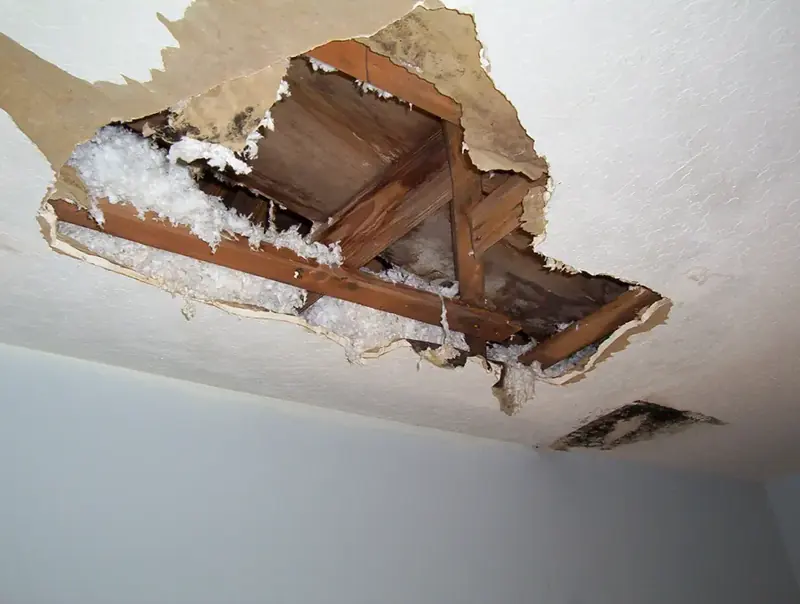
First steps for ceiling leak water damage in Vacaville
- 1
Shut off the source
Close the valve on the toilet, sink or washer upstairs, or the main if you cannot find it.
- 2
Turn off fixtures
Switch off the breaker for any light or fan with water in it, if the panel is dry.
- 3
Stay clear
Keep people and pets out from under a sagging or bulging ceiling.
- 4
Call to trace it
Call so the ceiling and the floor above are mapped and dried together.
What does ceiling leak water damage cost in Vacaville, CA?
In Vacaville, CA, ceiling leak water damage restoration typically runs $700 to $4,500, depending on how much of the ceiling got wet, whether insulation and the upstairs floor are involved and how long the leak ran.
Small stain
$700 to $1,500- Firm drywall
- Cavity drying
- Daily readings
Opened ceiling
$1,500 to $3,000- Controlled removal
- Insulation out
- Upstairs floor dried
Two-level loss
$3,000 to $4,500+- Several rooms
- Walls involved
- Extended drying
For a closer planning number, try the water damage cost calculator. The restoration company sets a firm price after it sees the damage.
How ceiling leak water damage is handled in Vacaville
Rapid local response
The response team works day and night across Vacaville, and emergency water is normally worked the day it comes in.
IICRC S500 drying standard
Structural drying, not just surface drying: equipment stays until the readings say dry, not until it looks dry.
Claim-ready documentation
A moisture map, daily readings and timestamped photos go into a file the adjuster can work from.
Vaca Valley water experts
Slab leaks, winter storms and attic AC overflow are the losses the Vacaville restoration crew knows best.
The ceiling leak water damage process, step by step
- 1
Map the moisture
The tech who does the walkthrough maps moisture with thermal imaging and pinless meters before any equipment goes down.
- 2
Pull the water
The extraction crew removes standing water with truck-mounted extraction, so it leaves the building instead of moving to the next room.
- 3
Set the drying
The drying team places air movers to each room's evaporation load and runs LGR dehumidifiers to pull that moisture from the air.
- 4
Read it dry
Readings go in the log every day until wet materials sit within 2 to 4 points of a dry reference, and the claim file gets the logs and photos.
Two-story homes in North Village, the Nut Tree area and the newer subdivisions put bathrooms, laundry rooms and sometimes the water heater upstairs. When a toilet supply line, shower valve, tub drain or washer hose fails, the water lands on the floor, soaks the subfloor and runs into the ceiling cavity of the room below.
Signs of a ceiling leak
- Brown rings or a spreading stain on the ceiling
- Bubbling paint or a soft, sagging spot
- Drips from a light fixture, fan or smoke detector
- Water trails on the wall below a bathroom
Water in a light fixture is an electrical hazard. Turn that circuit off at the panel if the panel is dry, and do not use the fixture until it has been checked.
How ceiling leak damage is dried
The tech who does the walkthrough uses thermal imaging and meters to trace the water from the source across the ceiling. The spread is usually wider than the stain. Where the drywall is soft or sagging, the ceiling is opened in a controlled cut; where it is firm, small openings let the drying team push dry air through the cavity. Wet insulation above comes out.
The upstairs floor matters too. Water under vinyl, tile or carpet on the second floor keeps feeding the ceiling below until that subfloor is dried as well. Readings are taken daily on both levels until they reach the drying goal. If the source is a burst supply line, see burst pipe cleanup; if it is the washer, see washer and dishwasher leak cleanup.
Keep an eye on it
Most ceiling leaks start at hoses and valves that are easy to check. The EPA WaterSense program has simple ways to find running leaks, and the CPSC recall list posts appliance recalls worth checking.
Related water damage services in Vacaville
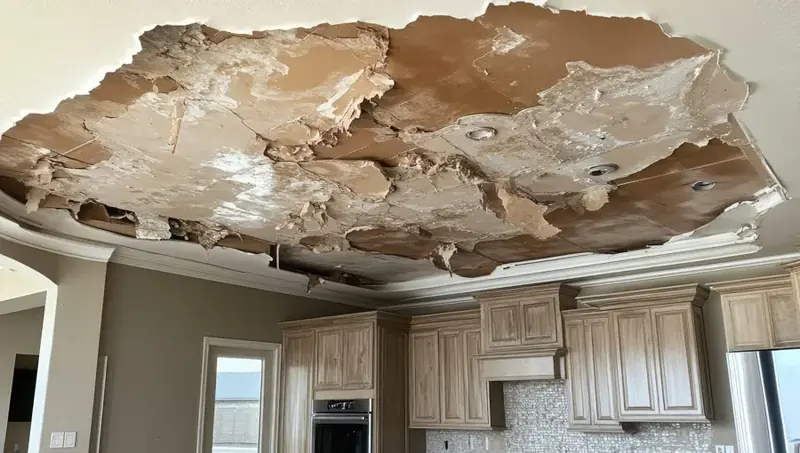 Roof Leak Water DamageWinter storm rain through worn shingles, flashing and vents, dried from the attic down.
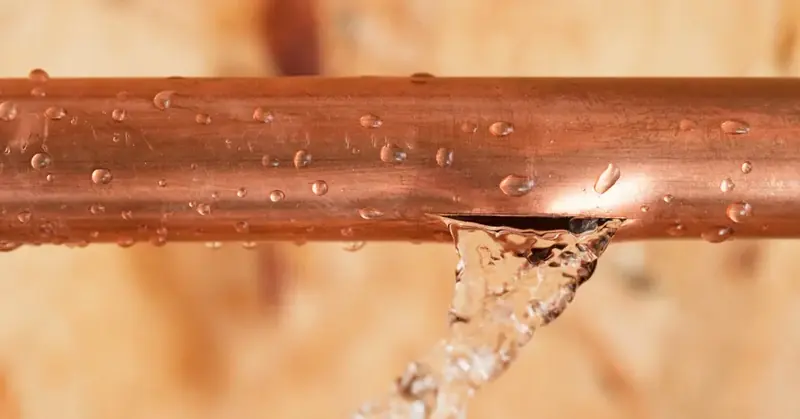 Burst Pipe CleanupSplit copper and polybutylene supply lines shut down, extracted and dried inside every wet cavity.
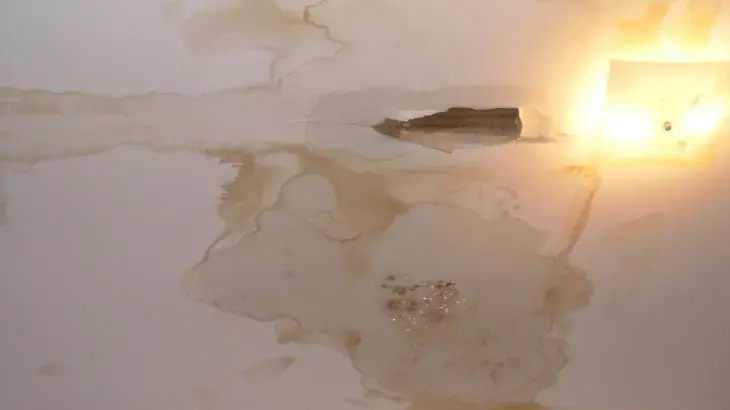 AC Overflow Water DamageAttic air handler pans that spill in long 100-degree stretches, dried out of ceilings and insulation.
Ceiling Leak Water Damage coverage across Vacaville
The restoration team handles ceiling leak water damage in every Vacaville ZIP code and the neighboring Solano County communities.
The restoration team covers all of Vacaville, from downtown and Browns Valley to Leisure Town and the Nut Tree, plus Elmira, Dixon, Winters and Allendale.
ZIP codes 95687, 95688 and 95696.
See every area coveredCeiling Leak Water Damage questions
Is a ceiling leak dangerous?
It can be. A sagging ceiling can fall, and water near light fixtures or wiring is an electrical hazard. Keep people out from under a bulge and turn off the circuit if the panel is dry.
Does the whole ceiling have to come down?
Usually not. Moisture mapping shows the wet area, and only drywall that is soft, sagging or stays wet is removed. Firm drywall is often dried in place.
How do I find where the leak is coming from?
Start with whatever sits above the stain: a toilet, tub, shower, sink or washer. A plumber can confirm the source, and thermal imaging shows how the water traveled.
Why does the stain come back after painting?
Because the ceiling cavity or the subfloor above was never fully dried, or the leak was not fixed. The stain should only be sealed and painted after readings are dry.
Is ceiling leak damage covered by insurance?
Sudden leaks such as a burst supply line are commonly covered, while slow leaks that went unnoticed may not be. Coverage depends on your policy, so it is worth checking with your own insurer.
How long does a ceiling take to dry?
A contained ceiling leak usually dries in two to four days once the source is stopped. If the upstairs subfloor is wet as well, expect longer.
Still wet while you read this? The restoration team works around the clock.
(888) 774-9605Ask about a stain spreading overheadWater coming through a Vacaville ceiling?
The wet area is almost always bigger than the stain. Get the ceiling and the floor above dried together.